Diamonds: Nature’s Sparkling Marvel
Diamonds stand apart from gold and silver as gemstones rather than metals. They are prized for their brilliance and durability.
Hardness
Diamonds are the hardest naturally occurring mineral, ranking 10 on the Mohs scale of hardness. Their unique atomic structure, consisting of a tetrahedral lattice, creates a dense and rigid crystal, making them virtually impervious to scratches. Diamonds are composed of strong covalent bonds, a tetrahedral crystal structure, and high density. They are harder than other gemstones, metals, and artificial materials. Diamonds are used in industrial cutting tools, abrasives, and high-performance semiconductors, heat sinks, and optical lenses. However, diamonds are not indestructible, as they can fracture or chip under hard impact. Jewelers must be careful when setting diamonds to prevent damage from sudden force. Despite their hardness, diamonds are valuable in both luxury and industrial applications, especially in engagement rings.

Brilliance
Diamond brilliance is the ability of a diamond to reflect and refract light, creating a dazzling sparkle. It is influenced by factors like cut, clarity, and refractive index. Diamonds have a high refractive index, which slows down light and enhances its brightness. The dispersion of light in a diamond separates white light into spectral colors, producing flashes of fire. A well-cut diamond optimizes light entry and exit, while a diamond with high polish and symmetry efficiently reflects light. Brilliance is often confused with fire, which disperses light into flashes of color, and scattering, which creates a sparkle effect. The most brilliant diamonds have precise proportions and facet alignment, with the round brilliant cut being the most popular. Factors that diminish brilliance include poor cut proportions, inclusions and blemishes, and dirt and oil.
Grading
Diamonds are evaluated based on the 4Cs, with cut being the most impactful on a diamond’s overall beauty and value. The 4Cs consist of Cut, Carat, Color and Clarity.

Versatility
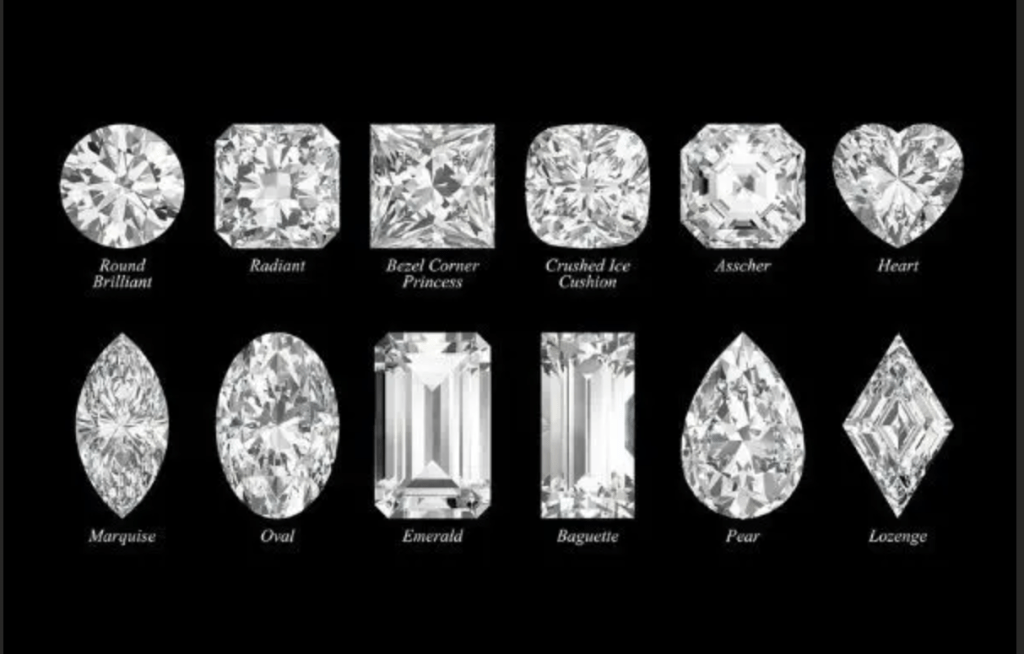
Diamonds come in various shapes and can be set in both gold and silver settings, though white metals are often preferred to enhance a diamond’s apparent whiteness.
(All photos are not owned by the blog. All rights reserved to their respected owners.)
 Luxe Jewels
Leave a comment